
Beyond the Prestige
Trauma, Desire, and Christopher Nolan

Christopher Nolan: A Master of Complexity and Conflicted Admiration
A Cinematic Odyssey: My Journey into Nolan's World
In the grand tapestry of cinema, Christopher Nolan's name shines brightly, a beacon of intellectual rigor and cinematic innovation. His films, from the mind-bending Inception to the epic Interstellar, have captivated audiences with their intricate narratives, stunning visuals, and thought-provoking themes. Yet, despite my deep fascination with his work, I find myself grappling with a conflicted admiration, an internal tug-of-war between awe and unease.
My journey into Nolan's cinematic universe has been a slow and deliberate one. It began on a first date with my now-partner, a shared love of movies forming the foundation of our relationship. As life's demands have left few opportunities for this sharing, that thread of connection has frayed, leaving a void we both feel. In the midst of Edmonton's "second summer," an unexpected burst of heat in September, I find myself yearning for the crispness of autumn, the liminal space between seasons where the harvest's bounty is savored and the promise of cozy movie nights beckons.
This desire to reconnect with shared passions has led me back to Nolan's films. Yet, despite multiple attempts, I've only managed to complete four out of his extensive filmography. This admission, while seemingly incongruous at the outset of an essay dedicated to his work, speaks to the unique challenge posed by Nolan's films. They are not mere entertainment; they're intellectual puzzles demanding active participation, refusing to yield their secrets easily.
The Nolan Challenge: Embracing Complexity and Ambiguity
As I heard on the podcast Unspooled, "Christopher Nolan is good at making his audience feel stupid." I finally felt seen, yes. Nolan refuses to simplify, instead inviting us into a world where the answers are rarely straightforward and the journey is as important as the destination. His films require multiple viewings, careful analysis, and a willingness to embrace ambiguity. They challenge us to step outside our comfort zones, to question our assumptions, and to engage with the narrative on a deeper level.
This intellectual rigor, while undeniably stimulating, can also be daunting. It demands a certain level of commitment from the viewer, a willingness to invest time and energy in unraveling the film's complexities. For some, this can be a barrier to entry, leading to frustration and a sense of inadequacy. Yet, for those who embrace the challenge, Nolan's films offer a rewarding and enriching cinematic experience.
The Prestige: A Microcosm of Nolan's Universe
This essay will delve into the enigmatic depths of The Prestige, one of Nolan's most captivating works. It serves as a microcosm of his cinematic universe, encapsulating his signature themes and techniques. Through a close examination of this film, we can gain a deeper understanding of Nolan's artistic vision and the complexities that both attract and repel viewers.
In this essay, I will explore the intricate interplay of identity, repetition, desire, and trauma, all set against the backdrop of a world where illusion and reality blur. Through a feminist lens, I examine the film's portrayal of women and the esoteric undercurrents that permeate its narrative while grappling with the complexities of Nolan's cinematic universe, acknowledging both its brilliance and its limitations.
II. The Allure of the Unseen: Trauma, Desire, and Identity in The Prestige
The Veil of Illusion: Unveiling the Narrative
The Prestige opens with a mesmerizing display of prestidigitation, setting the stage for the narrative that follows. A magician, his face obscured by shadows, performs a seemingly impossible feat, leaving the audience spellbound. "Are you watching closely?" a voice whispers, challenging us to unravel the secrets hidden within the performance. This opening scene, both captivating and enigmatic, encapsulates the film's central themes: the allure of the unseen, the power of illusion, and the fragility of identity.
The film's narrative structure mirrors this act of deception, weaving together multiple timelines and perspectives. We are introduced to Robert Angier and Alfred Borden, rival magicians locked in a deadly game of one-upmanship. Their stories unfold through their diaries, each offering a subjective and fragmented account of their shared past and intertwined destinies. The narrative unfolds like a puzzle, with each piece revealing a new layer of complexity and intrigue.
The Fragility of Identity: Mirrors and Masks
The Prestige challenges our understanding of identity, blurring the lines between self and performance. (SPOILERS!) The Borden twins, identical yet distinct, embody this duality, raising questions about authenticity and the constructed nature of the self. As the film astutely observes, "In the end, only one man lives to remember but what type of authenticity is present in the version that gets to live on?" The same can be said about us when we experience trauma. Pieces of us are changed as new memories are stored and old ones are excavated, creating a clone, a scrambled version of ourselves that lives on in memory of the previously discarded versions.
The film's exploration of identity extends beyond the Borden twins, permeating the very fabric of the narrative. The magicians, consumed by their rivalry, become entangled in a web of deception and disguise, their true selves hidden beneath layers of artifice. Even the audience is implicated in this game of illusion, constantly questioning what is real and what is merely a trick of the light.
The film's title, The Prestige, itself carries a double meaning. It refers not only to the final act of a magic trick, the awe-inspiring reveal, but also to the characters' relentless pursuit of prestige, of recognition and acclaim. This pursuit, however, comes at a steep cost, as the magicians sacrifice their identities, their relationships, and ultimately their lives in the name of their art.
III. The Structure of Deception: Narrative, Trauma, and the Esoteric
A Narrative Puzzle: Unveiling the Layers
The Prestige unfolds as a meticulously crafted narrative puzzle, inviting the audience to actively participate in its unraveling. The film's non-linear structure, with its interweaving timelines and multiple perspectives, challenges our perception of reality, blurring the lines between truth and illusion.
Nolan presents us two primary interwoven narrative threads: Angier reading Borden’s notebook in the diegetic1 past, and Borden reading Angier’s diary in the diegetic present. This narrative device, while initially disorienting, gradually reveals the complex motivations and hidden truths that drive the characters' actions.
The diaries themselves become symbolic objects, representing the characters' attempts to control their own narratives and shape their identities. Yet, as the film progresses, it becomes clear that these narratives are unreliable, subject to the biases and self-deceptions of their authors. The truth, like the secrets of a magic trick, remains elusive, hidden beneath layers of misdirection and carefully constructed illusions.
The Esoteric Symbolism: The Disappearing Bird
Woven into this intricate narrative tapestry is a thread of esoteric symbolism, hinting at a deeper layer of meaning beneath the surface of the film. The disappearing bird, a seemingly simple magic trick performed at the beginning and end of the film, becomes a powerful metaphor for the film's exploration of identity, transformation, and the unseen forces that shape our lives.
The disappearing bird, a seemingly simple magic trick, becomes a powerful metaphor for the film's exploration of identity and transformation. The bird's vanishing act, defying the laws of nature, suggests the existence of a hidden reality, a realm where the impossible becomes possible. This resonates with the characters' own journeys, as they navigate the blurred lines between their true selves and the personas they create for the stage.
This esoteric symbolism invites us to consider the possibility of hidden knowledge, a realm beyond the mundane where the laws of nature can be bent and manipulated. The magicians, through their craft, tap into this unseen world, harnessing its power to create awe and wonder. Their pursuit of the perfect illusion becomes a metaphor for the human quest for transcendence, a yearning to escape the limitations of the physical world and glimpse the infinite possibilities that lie beyond.
Trauma and Transformation: The Three Acts of a Magic Trick
Cutter's explanation of the magic trick, with its three distinct stages – "The Pledge," "The Turn," and "The Prestige" – provides a structural framework for understanding the film's narrative and the characters' psychological states. "The Pledge" represents the initial presentation, the magician's promise to perform the impossible. This mirrors the characters' initial states, their lives seemingly ordinary and predictable.
"The Turn" is the moment of transformation, where the ordinary becomes extraordinary. This stage corresponds to the traumatic events that shatter the characters' illusions of normalcy, forcing them to confront the harsh realities of their lives. Angier's loss of his wife, Borden's fractured identity, and the escalating rivalry between the two magicians all contribute to this sense of upheaval and disorientation.
"The Prestige" is the revelation, the awe-inspiring climax that leaves the audience breathless. This stage represents the characters' attempts to reclaim their lives, to find meaning and purpose in the aftermath of trauma. Yet, as the film reveals, true resolution may be unattainable, and the scars of trauma can linger indefinitely. The final "prestige" may be nothing more than an illusion, a carefully constructed facade masking the pain and loss that lie beneath.
IV. Modernity and Disenchantment: Angier's Nihilism and the Feminist Critique
The Clash of Eras: Tradition vs. Progress
The Prestige is set against the backdrop of the late 19th century, a time of rapid technological advancement and societal change. The film explores the tension between the allure of the past, with its emphasis on tradition and mystery, and the relentless march of progress, symbolized by Angier's obsession with scientific innovation.
This clash of eras is embodied in the rivalry between Angier and Borden. Angier, driven by a desire for fame and recognition, embraces the possibilities of modern technology, seeking to create illusions that defy the laws of nature. He represents the spirit of modernity, with its faith in science and its pursuit of progress at any cost. Borden, on the other hand, remains rooted in the traditions of stage magic, relying on sleight of hand and misdirection to captivate his audience. He embodies a more romantic view of the world, one where mystery and wonder still hold sway.
The film's visual language reinforces this contrast. Angier's performances are characterized by elaborate sets, dazzling special effects, and a sense of spectacle that reflects the era's fascination with technological marvels. Borden's tricks, in contrast, are more intimate and understated, relying on the power of suggestion and the audience's willingness to suspend disbelief.
Angier's Nihilism: A Reflection of Modern Disenchantment
Angier's relentless pursuit of Borden is fueled not only by professional rivalry but also by a deep-seated nihilism, a sense of disillusionment with the world. His stark declaration, "We all know the truth. The world is simple. It's miserable, and solid all the way through," encapsulates the disenchantment of modernity, a world where magic and wonder have been supplanted by a cold, mechanistic understanding of reality.
This nihilistic worldview is further reflected in Angier's willingness to sacrifice everything, including his own humanity, in pursuit of the perfect illusion. He becomes consumed by his obsession, blurring the lines between reality and performance, and ultimately losing sight of his own identity. The Prestige provides an ontological statement on reality and modernity, highlighting the potential dangers of unchecked technological progress and the erosion of spiritual connection in the modern world.
The film's portrayal of modernity as a time of "great disenchantment" resonates with broader cultural anxieties about the loss of magic and mystery in an increasingly technological world. The pursuit of progress, while undeniably beneficial in many ways, has also led to a sense of alienation and disconnection from the natural world and the deeper mysteries of existence. Angier's tragic trajectory serves as a cautionary tale, reminding us of the potential consequences of prioritizing technological advancement over human connection and spiritual fulfillment.
V. Deeper into the Labyrinth: Navigating the Complexities of Nolan's World
Trauma, Repetition, and Desire: A Lacanian Reading
The Prestige delves into the profound depths of the human psyche, exploring the intricate relationship between trauma, repetition, and desire. The film's fractured timeline, where past and present intermingle, mirrors the fragmented nature of traumatic memory. As French psychoanalyst Jacques Lacan posits, trauma disrupts the linear flow of time, compelling the subject to perpetually relive the past in an attempt to master the unmasterable.
Angier's relentless pursuit of Borden, driven by the traumatic loss of his wife Julia, exemplifies this Lacanian concept. His obsession with replicating Borden's "Transported Man" trick becomes a desperate attempt to regain control, to rewrite the past and undo the pain of his loss. Yet, each repetition of the trick, culminating in his own "death" and rebirth, only serves to reinforce the trauma, trapping him in an endless cycle of desire and despair. This repetition, as Freud argued, is "an attempt to retroactively master the event."
The water tank, a recurring motif in the film, further symbolizes this entanglement of trauma and desire. Julia's drowning in the tank marks the initial traumatic event, setting in motion a chain of repetitions that permeate the narrative. The tank becomes a haunting reminder of loss, a physical manifestation of the characters' submerged desires and unresolved grief.
Lacan's theory of desire posits that every object of desire is an insufficient substitute for the wholeness of being that the subject seeks. Desire, in relation to trauma, may point back to something forgotten in the past but also offers the possibility for the trauma to reappear in the present. In The Prestige, Julia's death serves as a deeper understanding of the structural mechanics of trauma, highlighting a dynamic whereby trauma is continually repeated.
Lacan's assertion that "Desire is a metonymy" further illuminates the film's exploration of desire and its connection to trauma. The object of desire is always lacking, always just out of reach, leading to a perpetual cycle of displacement and substitution. The characters' relentless pursuit of their desires, whether it be fame, revenge, or the perfect illusion, ultimately proves futile, as the true object of their desire remains forever elusive.
VI. Identity and Performance: The Women of The Prestige and the Feminist Lens
Women as Accessories: A Critique of Representation
The portrayal of women in The Prestige further complicates the film's exploration of identity and performance. Sarah, Olivia, and Julia, despite their differing circumstances, share a common fate: they are defined by their relationships to the male protagonists. Their identities become intertwined with the magicians' obsessions, their agency limited by societal expectations and the demands of the narrative.
Sarah, Borden's wife, is portrayed as a devoted and supportive partner, yet her own desires and ambitions remain largely unexplored. She exists primarily as a reflection of Borden's own internal conflict, a symbol of the domestic life he sacrifices in pursuit of his art. Olivia, Angier's assistant and lover, becomes entangled in the magicians' rivalry, her loyalty torn between the two men. She is both a pawn and a prize in their deadly game, her own desires and agency overshadowed by their relentless pursuit of one-upmanship.
Julia, Angier's wife, suffers the most tragic fate of all. Her death in the opening scene serves as the catalyst for Angier's obsession with Borden, setting in motion the chain of events that drives the narrative. Yet, even in death, Julia remains a spectral presence, haunting Angier's dreams and fueling his desire for revenge. She becomes a symbol of the unattainable, the perfect illusion that Angier can never fully possess.
This portrayal of women reflects a broader feminist critique of Nolan's work, which often perpetuates traditional gender roles and reinforces the objectification of female characters.
“The way in which these women were created in the film strips them of any true identity as each of them falls prey to the man's obsessions."
They become sacrifices in the pursuit of illusion and power, their deaths serving as catalysts for the men's transformations.
The Erasure of Women
The women in The Prestige are not merely supporting characters; they are reflections of the male protagonists' own fragmented identities. Their lack of agency and their subservient roles mirror the magicians' own struggles with authenticity and self-deception. As Borden's wife Sarah laments, "You weren't supposed to love us. You weren't supposed to care for us. You were supposed to disappear." Her words highlight the emotional detachment and sacrifice demanded of women in a patriarchal society, where their value is often tied to their ability to fulfill male desires and expectations.
The film's conclusion further underscores this erasure of female identity. In the final scene, as Angier lies dying, he is confronted by Borden, who reveals the true extent of his deception. The two men, consumed by their rivalry, have destroyed each other, leaving behind a trail of broken lives and shattered dreams. Yet, amidst this wreckage, the women remain largely invisible, their stories relegated to the margins of the narrative.
This lack of closure for the female characters reinforces the film's critique of patriarchal power structures. The women, despite their crucial roles in the narrative, are ultimately denied agency and autonomy. Their stories are left unresolved, their voices silenced, their identities erased in the wake of the men's destructive obsessions.
VII. Nolan's Cinematic Universe: A Conflicted Admiration
The Dark Knight: A Post-9/11 Landscape
Nolan's filmography extends beyond The Prestige, encompassing a range of genres and themes. The Dark Knight, released in 2008, stands as a landmark superhero film that transcends its genre, offering a chilling commentary on the post-9/11 world. The Joker, a mesmerizing embodiment of chaos and anarchy, exposes the fragility of societal order and the potential for darkness lurking within the human heart.
The film's exploration of morality and the blurred lines between good and evil resonates deeply in a world grappling with the complexities of terrorism and the erosion of trust. Batman, the iconic vigilante, embodies a conflicted sense of justice, while the Joker revels in the breakdown of societal norms. "You either die a hero, or you live long enough to see yourself become the villain."
Inception and the Philosophical Undercurrents
Inception, released in 2010, ventures into the realm of dreams and the subconscious, drawing inspiration from philosophical concepts such as Plato's cave and Kierkegaard's leap of faith. The film's intricate narrative, layered with symbolism and metaphysical musings, invites viewers to question the nature of reality and the power of the human mind.
However, as with many of Nolan's films, Inception has faced criticism for its portrayal of women. The female characters, while intriguing and complex in their own right, often serve as projections of the male protagonist's desires and anxieties. Mal, Cobb's deceased wife, haunts his dreams, a manifestation of his guilt and unresolved trauma. Ariadne, the talented architect, serves as Cobb's guide and confidante, yet her role remains largely defined by her relationship to him.
This pattern of female characters serving as catalysts or reflections of male protagonists' journeys is a recurring theme in Nolan's work, prompting feminist critiques and calls for more nuanced and empowered portrayals of women.
"It's tough being a woman in a Christopher Nolan movie."
The Nolan Paradox: Brilliance and Blind Spots
The conflicted admiration I feel towards Nolan's films stems from this tension between his undeniable talent and his problematic portrayal of women. His films are undeniably captivating, their intricate narratives, stunning visuals, and philosophical depth leaving a lasting impression on viewers. Yet, as a feminist viewer, I cannot ignore the ways in which his films perpetuate harmful stereotypes and reinforce patriarchal power structures.
This paradox creates a dilemma for viewers like myself. We are drawn to the intellectual and emotional depth of Nolan's films, yet we cannot fully embrace them without acknowledging their shortcomings. We are left to grapple with the question: Can we separate the art from the artist, or are the flaws inherent in the work itself?
Conclusion: The Enduring Power of Illusion and the Quest for Meaning
The Magic of Cinema: Confronting Reality and Illusion
The Prestige, like all of Nolan's films, is a multi-layered work that invites multiple viewings and interpretations. It is a film about obsession, identity, and the sacrifices we make in pursuit of our desires. It explores the complexities of trauma, the repetition of desire, and the blurred lines between performance and self.
Nolan's mastery of storytelling and his ability to weave together intricate narratives are undeniable. He creates worlds that are both familiar and strange, inviting us to question our perceptions and confront the complexities of the human experience. His films are not mere escapism; they are mirrors reflecting the anxieties, aspirations, and contradictions of our own lives.
The film's exploration of magic and illusion serves as a metaphor for the power of cinema itself. Like a skilled magician, Nolan uses misdirection, sleight of hand, and carefully constructed narratives to transport us to other worlds and challenge our assumptions. He reminds us that the line between reality and illusion is often blurred, and that the truth, like the secrets of a magic trick, may be hidden in plain sight.
The Quest for Meaning: Beyond the Illusion
As we navigate the labyrinthine depths of Nolan's cinematic universe, we are invited to embark on a quest for meaning, to search for the hidden truths that lie beneath the surface of his films. We are challenged to confront the complexities of our own world, to question the stories we tell ourselves, and to grapple with the enduring power of illusion.
In the end, like Angier and Borden, we may find that the pursuit of truth and meaning is an ongoing journey, one fraught with challenges and contradictions. The "prestige," the ultimate reveal, may remain elusive, forever shrouded in mystery. But the journey itself, the act of seeking and questioning, is where the true magic lies.
A Call for Change: Embracing Complexity and Inclusivity
As I continue to engage with Nolan's work, I strive to do so with both open eyes and a critical mind. Celebrating his artistic achievements while also demanding more nuanced and inclusive representations of women and other marginalized groups. Only then I think I can fully appreciate the enduring power of his films and their potential to illuminate the human experience in all its complexity.
The magic of cinema lies not only in its ability to transport us to other worlds but also in its capacity to challenge us, to make us question our assumptions, and to inspire us to create a more just and equitable world. As viewers, we have a responsibility to engage with films critically, to demand more from our storytellers, and to use the power of cinema to spark conversations and drive positive change. So thank you CN for inspiring this piece.
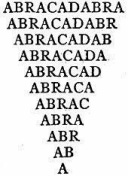
In the words of Borden, "Abracadabra2." May we continue to create, to question, and to seek the truth, even as we acknowledge the enduring power of illusion and the complexities of the human experience.
Diegesis is a style of fiction storytelling which presents an interior view of a world in which the narrator presents the actions of the characters to the readers or audience
Abracadabra is often associated with magic and conjuring tricks. Its precise origins are uncertain but it has been traced throughout the ancient Middle East specifically in the area now known as modern day Iraq. A second century poem called “precepts of medicine” by Roman physician Quintus Serenus Sammonicus as a cure for fever and malaria. It was believed the spell or incantation contained mystical powers and could be used to ward off evil spirits or disease and the term was often inscribed in amulets, pendants or worn as talisman. Since then, abracadabra has become a part of popular culture and used by stage magicians but provides a fun, rich history of folklore surrounding the art of illusion.
http://philfilmrhodes.blogspot.com/2013/01/gender-and-identity-in-prestige.html
https://psyartjournal.com/article/show/joy-looking_for_the_secret_death_and_desire
https://collider.com/tenet-christopher-nolan-female-characters/
https://www.overthinkingit.com/2010/07/29/christopher-nolan-feminism/
https://thefword.org.uk/2012/10/films_of_christopher_nolan/
https://collider.com/tenet-christopher-nolan-female-characters/
http://philfilmrhodes.blogspot.com/2013/01/gender-and-identity-in-prestige.html