
Christopher Nolan: Complexity, Control, and My Complicated Fascination
A Critical Odyssey Through Nolan’s World

I published a version of this essay in September 2024. Since then, I have watched 2 more of Nolan’s films. I have not yet seen The Odyssey, but I am very interested and hope the criticism presented is less applicable. This article contains spoilers for The Prestige. Additionally, because some of Nolan’s films are adaptations of books, the critical review is complicated. Certain strengths or flaws may reflect the source material as much as Nolan’s own directorial choices; my analysis aims to acknowledge this complexity while focusing on recurring patterns in his filmmaking.
Christopher Nolan’s films are renowned for their formal complexity and intellectual ambition. Yet beneath the puzzle-box plots and technical prowess lies a pattern: the same drive that compels Nolan to dazzle and confound audiences also shapes his treatment of character and gender. The exclusionary brilliance of his narratives mirrors the sidelining of women, as emotional, relational, and feminine realities are subordinated to the intellectual pursuits of the (male) protagonist. Nolan’s formal and representational limitations are not separate flaws—they are two sides of the same coin, revealing the costs of a cinema obsessed with control and revelation at the expense of vulnerability and inclusion.
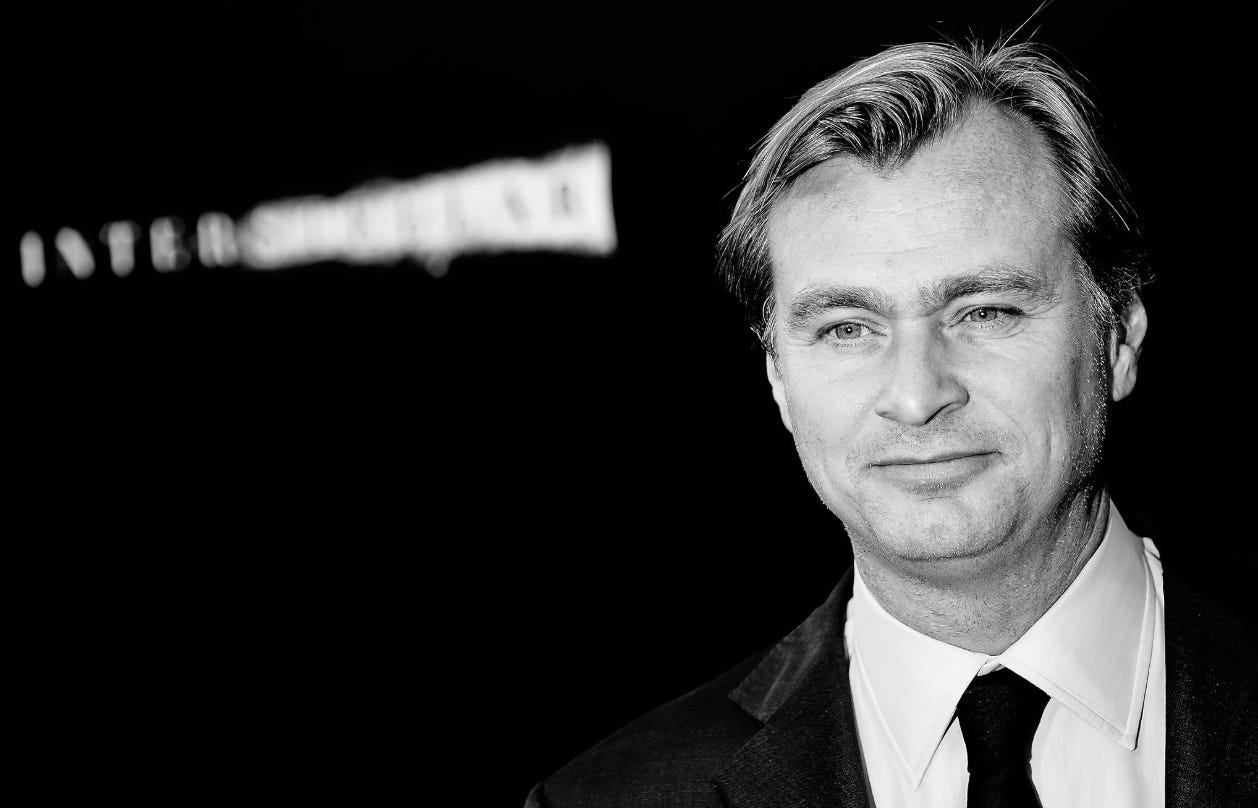
My journey into Nolan’s cinematic universe has been gradual and deliberate. Despite my fascination, I remain unsettled—an impulse often drowned out by the wave of uncritical praise Nolan routinely receives. I want to resist the tendency to view his films as above reproach. This critical perspective was shaped in part by my own history: a first date with my now-partner, where we watched The Prestige; a shared love of movies became the foundation of our relationship. As life has gotten busier, those shared movie nights have become rare, and I find myself missing that effortless connection. Now, as Edmonton’s “second summer” drags on, I crave the crispness of autumn and the comfort of those cozy movie nights we used to share.
Wanting to reconnect with what we love, I began revisiting Nolan’s films. Yet, even after several attempts, I’ve only managed to finish four. That may seem odd for someone writing an essay about his movies, but it reveals something important: Nolan’s films resist easy consumption. They are intricate puzzles that demand active engagement, making viewers work for every answer—and sometimes, for the motivation to see them through.
The Nolan Challenge: Embracing Complexity and Ambiguity
On the podcast Unspooled, co-host Amy Nicholson said, “Christopher Nolan is good at making his audience feel stupid.” (Scheer & Nicholson, 2018) I found myself relating to that sentiment. Nolan refuses to hand viewers easy answers; instead, he crafts worlds where little is straightforward, and the process of unravelling meaning matters as much as the outcome. His films demand sustained attention, repeated viewings, and a willingness to embrace uncertainty—pushing us to question our assumptions and dig deeper, not always for greater clarity but sometimes simply for complexity’s sake.
This intellectual rigor—though stimulating for some—can also be isolating. Nolan’s penchant for excessive complexity often feels more like a test than an invitation, privileging cleverness over emotional connection. For many viewers, what is celebrated as intellectual challenge may, in practice, become self-indulgence that excludes rather than includes. While some embrace this approach, others are left unmoved—questioning whether complexity alone constitutes great cinema.
The Prestige: A Case Study in Contradictions
This essay critically examines The Prestige, a film often regarded as a microcosm of Nolan’s cinematic tendencies. While The Prestige is adapted from Christopher Priest’s novel (1995), my focus is on how Nolan’s interpretation both inherits and transforms its source material. Rather than celebrating the film’s enigmatic depths, I interrogate how it encapsulates both the strengths and persistent limitations of Nolan’s approach—while noting that some elements, including certain narrative structures and characterizations, may originate with Priest. Through close analysis, I attempt to reveal the complexities that both attract and repel viewers—and to question the narrative choices that have become hallmarks of Nolan’s work. I explore identity, repetition, desire, and the blurred boundaries between illusion and reality. Using a feminist lens, I interrogate the film’s portrayal of women and its esoteric narrative currents, foregrounding both the value and the limitations of Nolan’s cinematic vision, as well as the influence of adaptation.
The Allure of the Unseen: Desire and Identity in The Prestige
Illusion and Perception: Unveiling the Narrative
The Prestige begins with a carefully choreographed display of stage magic, immediately foregrounding the film’s preoccupation with performance and deception. A magician—his face obscured—executes a seemingly impossible feat as the audience looks on.
“Are you watching closely?”
A voice asks, inviting viewers not merely to marvel, but to scrutinize. This opening, at once alluring and ambiguous, encapsulates the film’s central concerns: the seduction of the unseen, the mechanics of illusion, and the instability of identity.
The film’s narrative structure echoes its central theme of deception, weaving together multiple timelines and shifting perspectives. Robert Angier and Alfred Borden—rival magicians—are locked in a mutually destructive contest, their stories mediated through subjective, fragmented diaries. This puzzle-like narrative construction reveals complexity in layers, but also distances viewers, inviting analysis rather than immersion.
Identity’s Fragility: Mirrors and Masks
The Prestige interrogates the fluidity of identity, blurring the boundaries between self and performance. The Borden twins—identical yet distinct—embody this duality, raising questions about authenticity and the constructed nature of the self. As the film notes, “In the end, only one man lives to remember,” but what type of authenticity is present in the version that gets to live on? This dilemma extends beyond the narrative: as we accumulate experiences, parts of ourselves are reshaped, old identities are overwritten, and what remains is often a fragmented, reconstructed self—haunted by the memories of discarded versions.
The film’s interrogation of identity extends beyond the Borden twins, permeating the entire narrative. Both magicians, consumed by rivalry, are ensnared in deception and disguise, their true selves increasingly obscured by layers of performance. The audience, too, is drawn into this web of illusion—left to question what, if anything, remains authentic, and what is merely sleight of hand.
The film’s title, The Prestige, carries a deliberate ambiguity. It refers not only to the final act of a magic trick—the reveal—but also to the characters’ obsessive pursuit of status and recognition. This pursuit comes at a considerable cost: the magicians sacrifice identity, relationships, and ultimately their own well-being in service of their art.
The Structure of Deception: Narrative and the Esoteric
Narrative as Puzzle: Unveiling the Layers
The Prestige presents itself as a narrative puzzle, prompting the audience to actively piece together meaning. Its non-linear structure—interweaving timelines and shifting perspectives—deliberately blurs the boundaries between truth and illusion. Nolan constructs two primary narrative threads: Angier reading Borden’s notebook in the diegetic1 past, and Borden reading Angier’s diary in the diegetic present. While this device can initially disorient, it ultimately exposes the characters’ motivations and the concealed truths fueling their rivalry.
The diaries themselves function as symbolic artifacts, representing the characters’ efforts to control their narratives and construct their identities. However, Nolan’s emphasis on structure and narrative gamesmanship—shaped by both his direction and the source novel (Priest, 1995)—often undermines the development of secondary characters. Figures such as Sarah, Olivia, and Julia primarily serve to advance the plot or intensify the central rivalry, with little attention to their individual motivations or inner lives. While some of these patterns may originate in Priest’s narrative, their persistence in Nolan’s adaptation highlights a recurring limitation in his cinematic vision. As a result, these characters remain more like devices than fully realized individuals, diminishing the emotional resonance of their stories. The truth, like a well-guarded magic secret, remains elusive, and emotional investment is often sacrificed for intricate plotting and narrative cleverness.
Symbolism and Sacrifice: The Disappearing Bird
Threaded through the film’s complex narrative is a layer of esoteric symbolism—most notably the disappearing-bird trick, performed at both the beginning and the end. Consider the pivotal scene of Julia’s drowning: the camera lingers on the water tank, isolating Julia in a frame-within-a-frame that both literalizes and aestheticizes her entrapment. The audience is locked into Angier’s (and Borden’s) point of view—her terror is visible, but the emotional weight is displaced onto the men’s reactions. The editing is abrupt, the music swelling not with grief but with suspense, making her suffering a narrative device rather than a lived experience. What’s left after the water drains is not Julia’s perspective, but the void she leaves for the men to fill with obsession, rivalry, and guilt—a visual and emotional erasure that mirrors the film’s larger logic of exclusion. While seemingly simple, the disappearing-bird act becomes a metaphor for the film’s meditation on identity, transformation, and the unseen mechanisms that govern both the characters’ fates and the audience’s attention.
The disappearing bird act—ostensibly simple—serves as a pointed metaphor for the film’s investigation of identity and transformation. The bird’s vanishing, which appears to defy logic, gestures toward a hidden reality where the impossible is staged as plausible. The motif parallels the characters’ own struggles to distinguish between their authentic selves and the roles they perform, blurring boundaries both onstage and off.
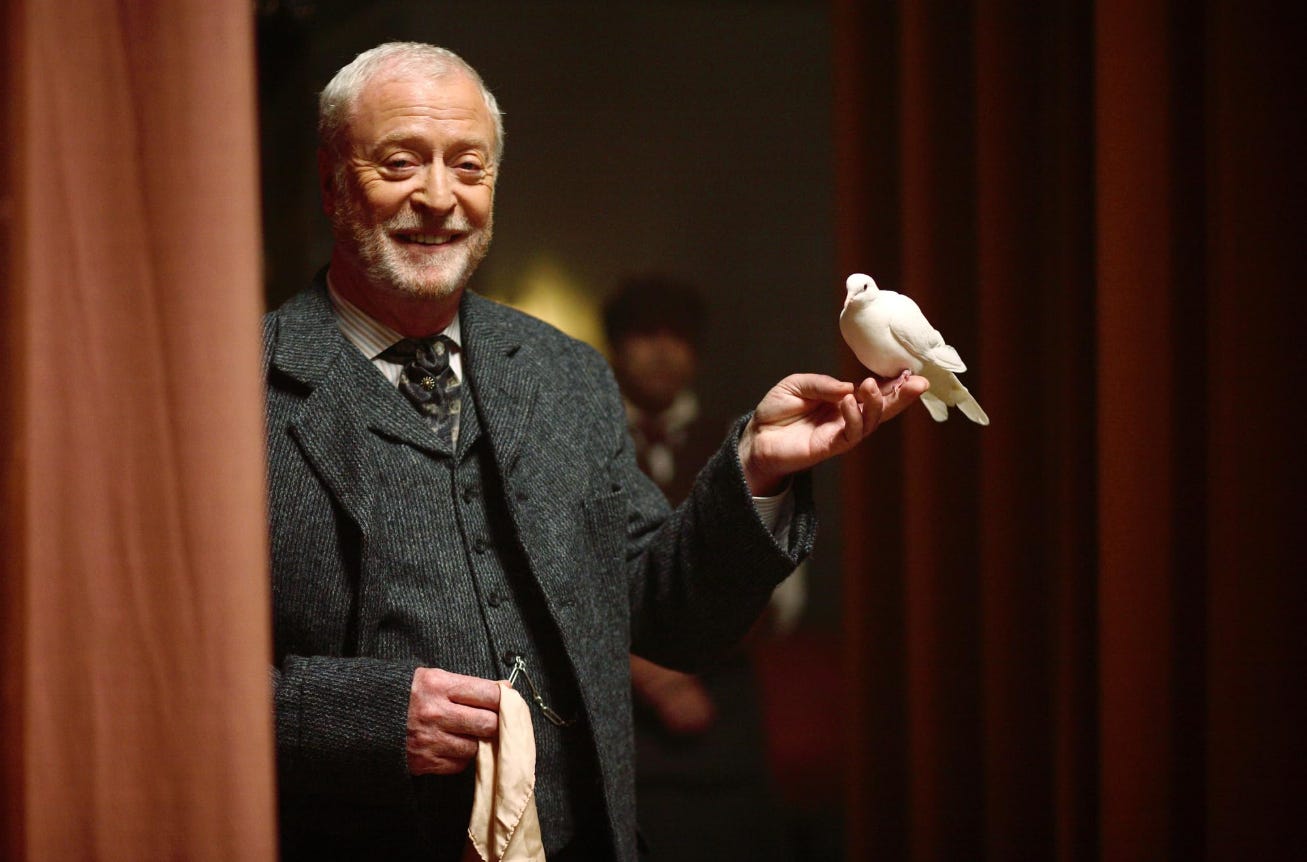
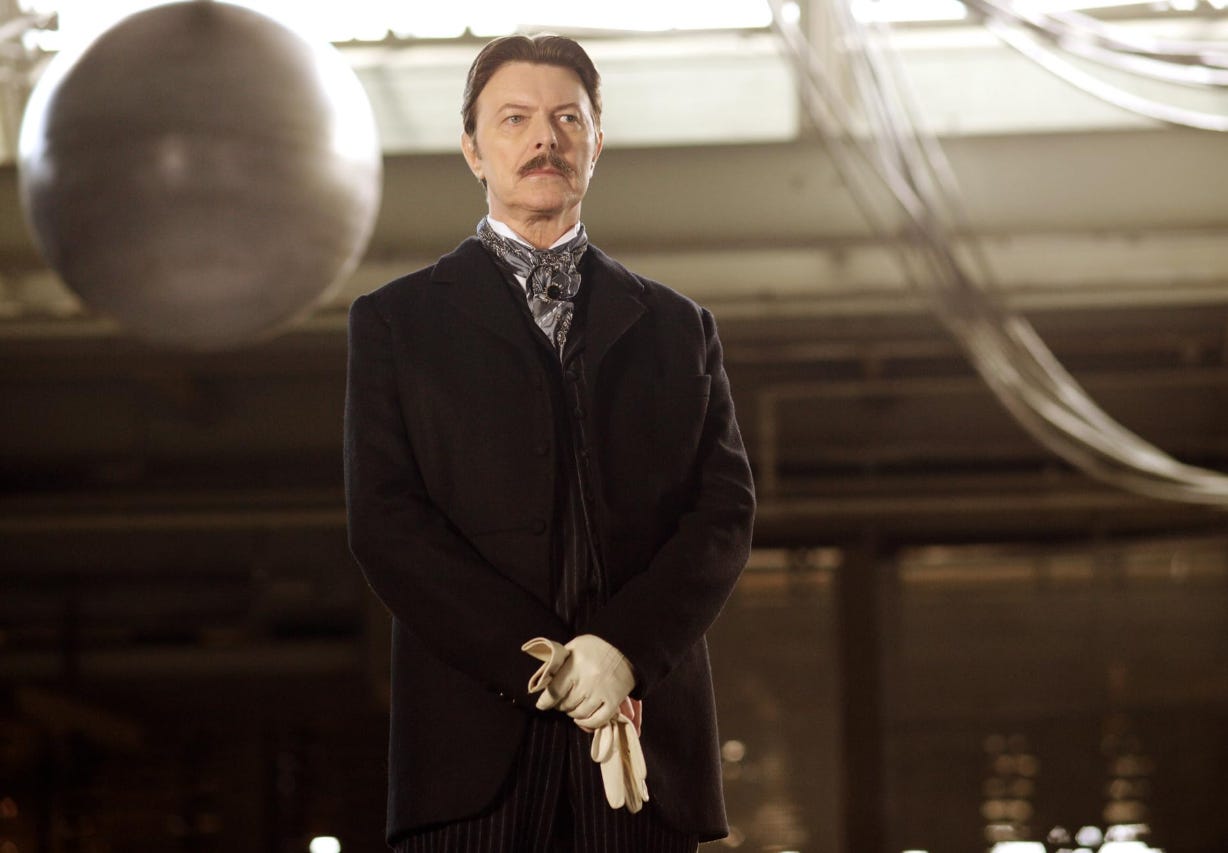
This symbolism encourages viewers to contemplate the existence of hidden knowledge—a domain beyond the everyday, where the ordinary laws of nature are subverted. In The Prestige, this pursuit is literalized through the film’s Tesla subplot: Tesla’s device, a product of science-as-magic, allows Angier to cross boundaries that perhaps ought to remain intact. The magicians’ relentless quest for the perfect trick becomes both a metaphor for human aspiration to exceed limits and a warning about the dangers of obsession with mastery. The pursuit of the unseen or “impossible” results in numerous casualties—bodies, relationships, and mysteries sacrificed in service of ambition. The film foregrounds the destructive consequences of obsessive drive; Nolan not only exposes the costs incurred, but, through the narrative’s repeated pattern of loss and erasure, invites viewers to critically assess whether such pursuits are justified. By consistently showing the fallout of these obsessions, The Prestige offers a critique of the relentless quest for hidden knowledge, aligning its cautionary narrative with anxieties about modernity and disenchantment and emphasizing the inseparability of the allure of the unknown from the dangers of exclusion and destructive fixation.
Transformation and Revelation: The Three Acts of a Magic Trick
Cutter’s breakdown of the magic trick into three stages—”The Pledge,” “The Turn,” and “The Prestige”—serves as a structural lens for interpreting the film’s narrative and the characters’ psychological arcs. “The Pledge” marks the initial setup: the magician’s assurance of the impossible. This stage mirrors the characters’ starting points, when their lives appear unremarkable and routine.
“The Turn” marks the transformative moment, when the ordinary is upended and the extraordinary emerges. In the film, this stage aligns with pivotal disruptions to the characters’ routines, forcing them to confront unforeseen challenges. Angier’s personal loss, Borden’s fractured identity, and the intensifying rivalry between the magicians all fuel this atmosphere of upheaval and disorientation.
“The Prestige” is the final revelation—the dramatic climax designed to astonish. In narrative terms, this stage symbolizes the characters’ efforts to reestablish purpose and meaning after disruption. Yet the film suggests that genuine resolution is elusive; the aftereffects of upheaval persist. The ultimate “prestige” may be little more than illusion—a meticulously crafted surface concealing unresolved tensions and ambiguity beneath.
Modernity and Disenchantment: Angier’s Nihilism and the Feminist Critique
Tradition vs. Progress: The Clash of Eras
The Prestige unfolds in the late 19th century—a period marked by rapid technological change and shifting social norms. The film interrogates the tension between nostalgia for tradition and the drive toward progress, embodied by Angier’s fixation on scientific innovation at the expense of all else.
This clash of eras is personified in the rivalry between Angier and Borden. Angier, motivated by ambition and recognition, embraces technological innovation and pursues illusions that challenge natural law. He stands as an emblem of modernity—marked by faith in science and an uncritical pursuit of progress. In contrast, Borden is anchored in the traditions of stage magic, relying on sleight of hand and misdirection, and representing a more romantic worldview in which mystery and wonder still matter.
The film’s visual style reinforces this thematic contrast. Angier’s performances are marked by elaborate sets, conspicuous special effects, and overt spectacle, mirroring the period’s obsession with technological innovation. In contrast, Borden’s acts are intimate and understated, relying on subtle suggestion and the audience’s willingness to be complicit in the illusion.
Modern Disenchantment: Angier’s Nihilism
Angier’s relentless pursuit of Borden is driven not only by rivalry but by an underlying nihilism—a profound disillusionment with the world. His stark declaration, “We all know the truth. The world is simple. It’s miserable, and solid all the way through,” epitomizes the disenchantment characteristic of modernity, where wonder is displaced by a reductionist, mechanistic worldview.
This nihilistic perspective is underscored by Angier’s willingness to sacrifice everything—even his own humanity—in pursuit of the perfect illusion. His obsession consumes him, dissolving the boundary between reality and performance and leading to a loss of self. The Prestige offers an ontological critique of modernity, underscoring the risks of unchecked technological ambition and the diminishing sense of spiritual connection in a mechanized world.
The film’s depiction of modernity as an era of “great disenchantment” reflects wider cultural anxieties about the erosion of magic and mystery in a technological age. While the pursuit of progress brings clear benefits, it also fosters alienation and a growing disconnect from the natural world and existential wonder. Angier’s tragedy serves as a cautionary narrative, illustrating the risks of privileging technological advancement over human connection and spiritual depth.
Deeper into the Labyrinth: Navigating Nolan’s Complexities
Repetition and Desire: A Lacanian Reading
The Prestige probes the complexities of the human psyche, examining the interplay between repetition, desire, and the lingering effects of past experience. The film’s fractured timeline—where past and present intermingle—mirrors the fragmented nature of memory itself. Drawing on Lacanian psychoanalysis, the narrative suggests that repetition disrupts linear temporality, compelling characters to revisit and rework the past in a quest for resolution that may never come. (Forrester, 1992, pp. 1-17)
Angier’s relentless pursuit of Borden, motivated by the loss of his wife Julia, exemplifies this Lacanian dynamic. His fixation on replicating Borden’s “Transported Man” trick is a compulsive effort to regain control, to rewrite the past and escape the pain of loss. Yet each repetition of the trick—culminating in his own symbolic “death” and rebirth—only reinforces the underlying pattern, trapping him in a perpetual cycle of desire and dissatisfaction. This repetition, as Freud argued, is “an attempt to retroactively master the event.” (Forrester, 1992, pp. 287-300)
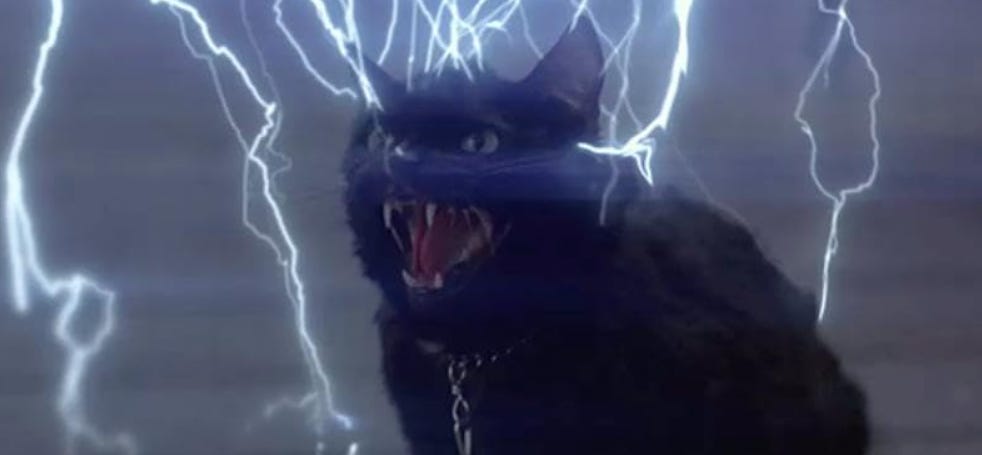
The water tank, a recurring motif in the film, further symbolizes the entanglement of repetition and desire. Julia’s drowning in the tank marks the pivotal traumatic event, launching a chain of repetitions that ripple through the narrative. The tank stands as a haunting emblem of loss—a physical reminder of both submerged longing and unresolved grief.
Lacan’s theory of desire holds that every desired object is a substitute—never fully satisfying the subject’s longing for wholeness. Desire, as it relates to loss, may point back to something irretrievable in the past, but also introduces the potential for that absence to reassert itself in the present. In The Prestige, Julia’s death illuminates the film’s structural mechanics of repetition and loss, highlighting a cycle in which absence and longing are continually re-enacted.
Lacan’s assertion that “desire is a metonymy” deepens our understanding of how the film handles longing and absence. (McGowan, 2019) The object of desire is always lacking, perpetually out of reach, creating a cycle of displacement and substitution. The characters’ relentless pursuits—whether of fame, revenge, or the perfect illusion—are ultimately futile, as the true object of desire remains forever unattainable.
Identity and Performance: Women in The Prestige Through a Feminist Lens
Women as Accessories: Critiquing Representation
The portrayal of women in The Prestige exposes further complications in the film’s treatment of identity and performance. Sarah, Olivia, and Julia—despite their distinct circumstances—share a common fate: they are defined almost exclusively by their relationships to the male protagonists. Their identities are subsumed by the magicians’ obsessions, with their agency circumscribed by both societal norms and the narrative’s demands (Phil Film Rhodes, 2013; Joy, n.d.; Morris, 2012; Fenzel, 2010; Lussier, 2020).
Sarah, Borden’s wife, is depicted as a devoted partner, but the film offers little insight into her inner world; her desires, frustrations, and emotional burdens remain largely offscreen. This marginalization is evident in scenes such as her repeated inquiries—”Are you watching closely?”—which serve not to foreground her own perspective, but to echo the film’s central motif of scrutiny and concealment. Her growing distress and eventual suicide are treated less as the culmination of her own psychological journey and more as a narrative device that clarifies Borden’s fractured identity, underlining his failure to balance personal and professional commitments.
Similarly, Olivia, Angier’s assistant and lover, is entwined in the escalating rivalry, yet is repeatedly positioned according to the needs and manipulations of the magicians rather than her own. For example, although Olivia attempts to assert her agency by shifting allegiances and expressing disillusionment with Angier’s obsession, her efforts are ultimately circumscribed; she is repeatedly compelled to choose between loyalty to one man or the other, her subjectivity reduced to a function of their ambitions. The film thus renders Olivia both a pawn—deployed to unsettle Borden—and a prize—coveted by Angier as a demonstration of dominance—effectively subsuming her autonomy within the men’s relentless quest for supremacy.
Julia, Angier’s wife, experiences the most tragic fate in the film. Her death in the opening scene serves as the narrative catalyst for Angier’s obsession with Borden, setting off the chain of events that propels the story. Even in death, Julia is reduced to a spectral presence—haunting Angier’s psyche and fueling his desire for revenge. She is transformed into a symbol of the unattainable: the perfect illusion Angier can never truly reclaim or possess. This portrayal of women is not unique to The Prestige but reflects a recurring and deeply problematic pattern throughout Nolan’s body of work—even when adapting from novels where these dynamics may already be present. Time and again, women are sidelined, sacrificed, or “fridged” to advance male character arcs—a persistent limitation that endures despite ongoing critique (Morris, 2012; Fenzel, 2010). Nolan’s films, whether original or adapted, consistently struggle to grant women meaningful agency, depth, or narrative autonomy.
The way in which these women were created in the film strips them of any true identity, as each falls prey to a man’s obsessions.
They are rendered sacrifices to the pursuit of illusion and power, their deaths functioning as catalysts for male transformation rather than as moments of narrative significance in their own right.
Erasing Women: Narrative Margins and Absence
The women in The Prestige function less as independent characters and more as reflections of the male protagonists’ fractured identities. Their lack of agency and subservient roles parallel the magicians’ struggles with authenticity and self-deception. As Borden’s wife Sarah laments,
“You weren’t supposed to love us. You weren’t supposed to care for us. You were supposed to disappear.”
Her words expose the emotional detachment and sacrifice demanded of women—not only within the narrative, but by a patriarchal society that ties their value to fulfilling male expectations and desires.
The film’s conclusion further underscores this erasure of women’s identity. In the final scene, as Angier lies dying and is confronted by Borden—who reveals the true extent of his deception—the two men, consumed by rivalry, have destroyed each other, leaving behind a trail of broken lives and shattered dreams. Yet, amidst this wreckage, the women remain largely invisible, their stories relegated to the margins of the narrative. This outcome exemplifies how the same impulse that drives Nolan’s intellectual storytelling ultimately reinforces the exclusion of feminine and emotional realities from the core of his cinema.
This lack of closure for the female characters reinforces the film’s implicit critique of patriarchal power structures. Despite their importance to the narrative, the women are ultimately denied agency and autonomy. Their stories remain unresolved, their voices silenced, and their identities erased in the aftermath of the men’s destructive obsessions.
Nolan’s Cinematic Universe: A Conflicted Admiration
The Dark Knight in a Post-9/11 Landscape
While The Prestige exemplifies Nolan’s fascination with illusion, identity, and narrative complexity, his exploration of these themes continues—and evolves—in other works. Nowhere is this more evident than in The Dark Knight (2008), a film that, rather than directly adapting a single comic, weaves together decades of Batman mythology and motifs (Kane & Finger, 1939). Often heralded as a genre-defining superhero film, it has been interpreted as a commentary on the anxieties of the post-9/11 era. The Joker, as a figure of chaos and anarchy, exposes the fragility of societal order and the ever-present potential for darkness beneath the surface of the human psyche.
The film’s interrogation of morality and the blurred boundaries between good and evil echoes the uncertainties of a world grappling with terrorism and diminishing social trust. Batman, as a vigilante, represents a conflicted and often ambiguous sense of justice, while the Joker embodies the collapse of order and the allure of chaos. The oft-quoted line—”You either die a hero, or you live long enough to see yourself become the villain”—underscores the film’s skepticism about the stability of moral categories.
Inception: Philosophical Depths and Undercurrents
Inception (2010), an original screenplay by Nolan, explores the terrain of dreams and the subconscious, engaging with philosophical ideas such as Plato’s cave and Kierkegaard’s leap of faith. The film’s intricate narrative, rich in symbolism and metaphysical inquiry, encourages viewers to interrogate the nature of reality and the limits—and limitations—of the human mind.
As with many of Nolan’s films, Inception has been critiqued for its treatment of women (Lussier, 2020; Morris, 2012; Fenzel, 2010). While the female characters possess moments of complexity, they often function as projections of the male protagonist’s desires and anxieties. Mal, Cobb’s deceased wife, haunts his subconscious—a manifestation of guilt and unresolved inner conflict. Ariadne, the architect, is positioned as Cobb’s guide and confidante, yet her role remains defined by her proximity to his narrative. This pattern directly echoes the treatment of female characters in other Nolan films such as The Prestige (Priest, 1995) and The Dark Knight (2008), where women like Sarah, Julia, and Rachel Dawes serve primarily as narrative catalysts for male development or as representations of loss and longing rather than autonomous individuals.
Notably, in films adapted from books, some of these patterns are inherited, but their persistence across Nolan’s original and adapted works indicates a consistent tendency to miss opportunities for richer, more authentic storytelling. Nolan’s habitual sidelining of women undermines the emotional depth of his films and renders his cinematic worlds less resonant and true to lived experience. This pattern—where female characters function mainly as catalysts or mirrors for male protagonists—remains consistent throughout Nolan’s oeuvre and has generated sustained feminist critique. Scholars consistently argue for richer, more complex, and autonomous female representations, urging Nolan to move beyond reductive roles and advance gender equity in storytelling (Fenzel, 2010; Morris, 2012).
It’s tough being a woman in a Christopher Nolan movie.
The Nolan Paradox: Technical Talent and Limitations
My complicated relationship with Nolan’s films arises from the persistent tension between his technical prowess and his recurring limitations—most notably around gender. The impact of his work is undeniable, but so too is the harm in repeatedly recycling narrow perspectives. Technical achievement does not excuse shortcomings in representation or the perpetuation of exclusionary tropes.This paradox generates an ongoing dilemma for viewers like me: we are drawn to the intellectual and emotional ambition of Nolan’s films, yet our appreciation is tempered by their limitations.
Conclusion: The Enduring Power of Illusion and the Quest for Meaning
Cinema’s Magic: Confronting Reality and Illusion
The Prestige—like much of Nolan’s work—is multi-layered, inviting repeated viewings and divergent interpretations. But my stance is one of persistent fascination—a critical engagement with the interrogation of obsession, identity, and the costs of pursuing desire. The film’s ambiguity and unresolved tensions reflect my own experience as a viewer, amplifying the interplay between performance and selfhood and underscoring how critical analysis and personal reflection can intersect in the ongoing search for meaning.
Despite the limitations discussed, Nolan’s films consistently demonstrate a rare ambition in mainstream cinema. His willingness to challenge audiences, push narrative boundaries, and experiment with structure sets him apart from many of his peers. These qualities, while sometimes contributing to the very limitations this essay critiques, also underpin the enduring fascination and debate his work inspires.
Nolan’s technical command of storytelling and narrative complexity is difficult to dispute. Yet the same cinematic sleight of hand that dazzles can also distract: spectacle risks overshadowing more substantive concerns, such as inclusivity and emotional resonance for those left unrepresented. Nolan’s films are not simply escapism; they mirror our anxieties, aspirations, and contradictions. Still, the true magic of cinema should expand our sense of possibility—not reinforce its limits.
The film’s preoccupation with magic and illusion operates as a metaphor for cinema itself. Like a magician, Nolan employs misdirection, sleight of hand, and intricately constructed narratives to transport viewers and provoke reconsideration of what is real. He demonstrates that the boundaries between reality and illusion are porous, and that truth—like a magician’s secret—may be concealed in the most obvious places.
Quest for Meaning: Beyond Illusion
As we navigate the labyrinthine structure of Nolan’s cinematic universe, we are prompted to pursue meaning and to interrogate the hidden truths beneath the surface. His films challenge us to confront the complexities of our own world, question the narratives we construct, and grapple with the persistent allure—and danger—of illusion.
Ultimately, like Angier and Borden, we discover that the pursuit of truth and meaning is a continuous, sometimes contradictory journey. The “prestige”—the final reveal—may remain elusive, permanently shrouded in ambiguity. Yet it is the process of seeking, questioning, and confronting complexity that constitutes the real magic.
Call for Change: Embracing Complexity and Inclusivity
As I continue to engage with Nolan’s work, I do so with both openness and sustained critical awareness. Acknowledging these shortcomings is only a first step; as audiences, we must hold influential filmmakers to higher standards. A lasting cinematic legacy depends not only on innovation and technical craft but also on the willingness to tell broader, more inclusive stories that reflect the full complexity of the world.
The true magic of cinema is not just its power to transport, but its capacity to challenge us—to unsettle, to provoke, and to imagine worlds more inclusive, more truthful, and more humane. Nolan’s relentless pursuit of technical and narrative complexity dazzles, but it also narrows what—and who—is allowed to matter onscreen. If the cost of brilliance is the erasure of vulnerability, relation, and difference, then the prestige is always a little hollow. The next evolution of cinema will belong to those who make space for complexity, contradiction, and the full range of human experience. Only then can cinema’s illusions truly illuminate what it means to be alive.
In the words of Borden, “Abracadabra.”2 May we keep creating, keep questioning, and keep seeking the truth—even as we recognize the enduring power of illusion and the complexities woven through human experience.
References
Fenzel, P. (2010, July 29). Christopher Nolan and feminism. Overthinking It. https://www.overthinkingit.com/2010/07/29/christopher-nolan-feminism/
Forrester, J. (1992). In the beginning was repetition: On inversions and reversals in psychoanalytic time. Time & Society, 1(2), 287-300. https://doi.org/10.1177/0961463X92001002010
Joy. (n.d.). Looking for the secret: Death and desire in The Prestige. PsyArt Journal. https://psyartjournal.com/article/show/joy-looking_for_the_secret_death_and_desire
Kane, B., & Finger, B. (1939). Batman [Comic book]. DC Comics.
Lussier, G. (2020, August 28). Tenet: Christopher Nolan’s female characters. Collider. https://collider.com/tenet-christopher-nolan-female-characters/
McGowan, T. (2019). The traumatic screen: The films of Christopher Nolan. University of Texas Press. https://www.jstor.org/stable/10.7560/737822
Metcalfe, T. (2025, October 20). The ancient—and mysterious—history of ‘abracadabra’. National Geographic. https://www.nationalgeographic.com/premium/article/abracadabra-meaning-malaria-spell-magic
Morris, J. (2012, October). The films of Christopher Nolan. The F-Word. https://thefword.org.uk/2012/10/films_of_christopher_nolan/
Phil Film Rhodes. (2013, January). Gender and identity in The Prestige. http://philfilmrhodes.blogspot.com/2013/01/gender-and-identity-in-prestige.html
Priest, C. (1995). The Prestige. Touchstone.
Scheer, P. & Nicholson, A. (2018). Unspooled Podcast. Earwolf. https://www.unspooledpodcast.com/
In storytelling, diegetic refers to anything that exists within the fictional world of a narrative
Abracadabra is a term long associated with magic and conjuring tricks. Its precise origins are uncertain, but it can be traced back to the ancient Middle East, particularly to the region of modern-day Iraq. The earliest known reference appears in the second-century poem “Precepts of Medicine” by the Roman physician Quintus Serenus Sammonicus, where it was prescribed as a cure for fever and malaria. The word was believed to possess mystical powers and was used to ward off evil spirits or disease; it was often inscribed on amulets or pendants and worn as a talisman. Over time, abracadabra became embedded in popular culture as the catchphrase of stage magicians, carrying a rich folklore surrounding the art of illusion. (Metcalfe, 2025)